
America at the Brink: When Independence Felt Fragile
By 1781, the American Revolution had lost its youthful bravado. The slogans still circulated, but the war itself had grown old. Supplies were thin. Soldiers were tired. Congress struggled to pay anyone on time, an administrative problem that feels familiar to anyone who has worked inside an underfunded institution and been asked to deliver miracles anyway.
For many, freedom no longer felt inevitable. It felt conditional.
That uncertainty matters. Revolutions are not powered by speeches alone; they are sustained by logistics, morale, and trust. And trust, once strained, is difficult to restore. The colonies needed something decisive, something that would shift the conversation from survival to legitimacy.
That moment arrived quietly, along the Virginia coast.
Why Yorktown Mattered More Than It First Appeared
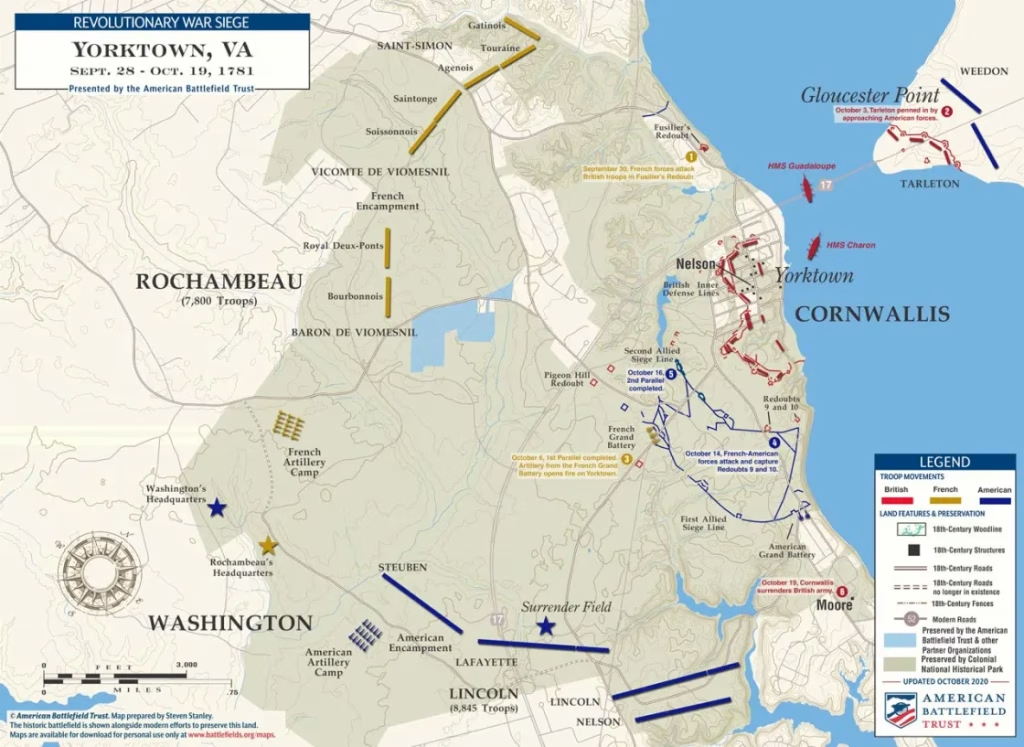
Yorktown was not a major city. It was not Boston or Philadelphia. But it sat where land and water met in a way that made strategy unavoidable. The town bordered the Chesapeake Bay, offering access for ships and a defensive position that appeared—at least to British General Charles Cornwallis—manageable.
Appearances can be expensive.
Cornwallis believed British naval power would protect him. That assumption shaped every choice he made. Geography, however, is indifferent to confidence. Once trapped, Yorktown became less a refuge and more a holding pen.
For the Americans, Yorktown represented opportunity. For the British, it became exposure. Control of that space meant control of the war’s final chapter. And control was about to change hands.
Alliance as Leverage: Washington, Rochambeau, and France
George Washington understood something many leaders learn late: independence does not mean isolation.
The alliance with France was not symbolic. It was operational. French troops arrived with discipline sharpened by European warfare. French artillery carried weight, literally and figuratively. And French naval support made the difference no colonial militia could manufacture on its own.
Washington and French General Jean-Baptiste de Rochambeau coordinated with precision that would impress any modern project manager. Timelines mattered. Silence mattered. Misdirection mattered. British commanders expected action in New York. Instead, American and French forces marched south with purpose, their movement concealed until it was irreversible.
This kind of coordination rarely happens by accident. It requires trust across cultures, languages, and political interests. For Black Americans especially, that detail resonates. History often downplays how collective effort—across lines—has been essential to progress, even when recognition later becomes uneven.
Yorktown was proof that coalition power works when egos step aside.
The French Navy and the Closing of the Door
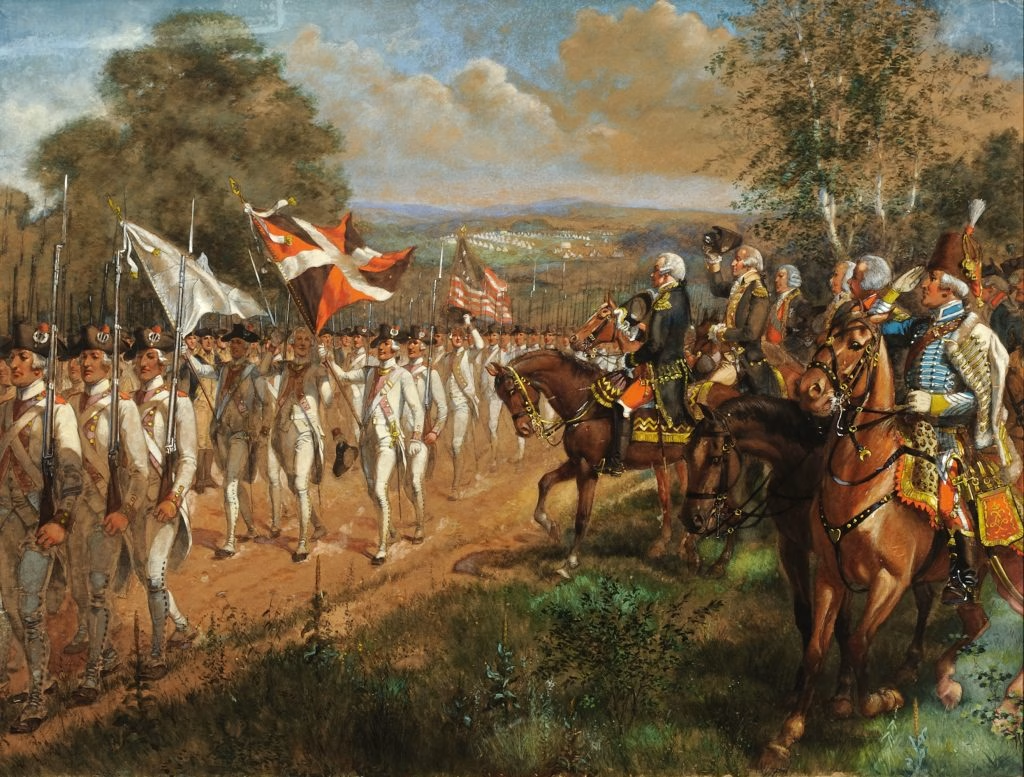
Washington Reviewing Our Ally by Ogden M.2021.
The turning point came at sea.
Admiral François de Grasse led the French fleet into the Chesapeake and met the British navy in what became known as the Battle of the Chesapeake. The engagement did not last long, but its consequences did. The British retreated. The bay closed. Cornwallis was sealed in.
No reinforcements.
No evacuation.
No escape.
In modern terms, this was a supply-chain collapse. Once the route was blocked, everything downstream failed. Food ran low. Ammunition dwindled. Options disappeared.
Empires, like corporations, can survive losses. What they cannot survive is exposure without contingency.
Inside the Siege: Pressure Without Relief
Life inside Yorktown deteriorated quickly. British soldiers endured constant artillery fire, deteriorating food supplies, and the slow psychological grind of waiting. Waiting is often worse than fighting. Every night brought the sound of enemy trenches creeping closer. Every morning confirmed that the perimeter had shrunk again.
Morale eroded. Not dramatically. Gradually.
This kind of pressure changes people. It strips away bravado and leaves only calculation. Cornwallis attempted a breakout across the York River. Weather intervened. The attempt failed. At that point, surrender was no longer a choice between honor and disgrace. It was the only viable option left.
On October 19, 1781, British forces laid down their arms.
The war did not end that day, but the argument did.
Benedict Arnold: Before the Fall
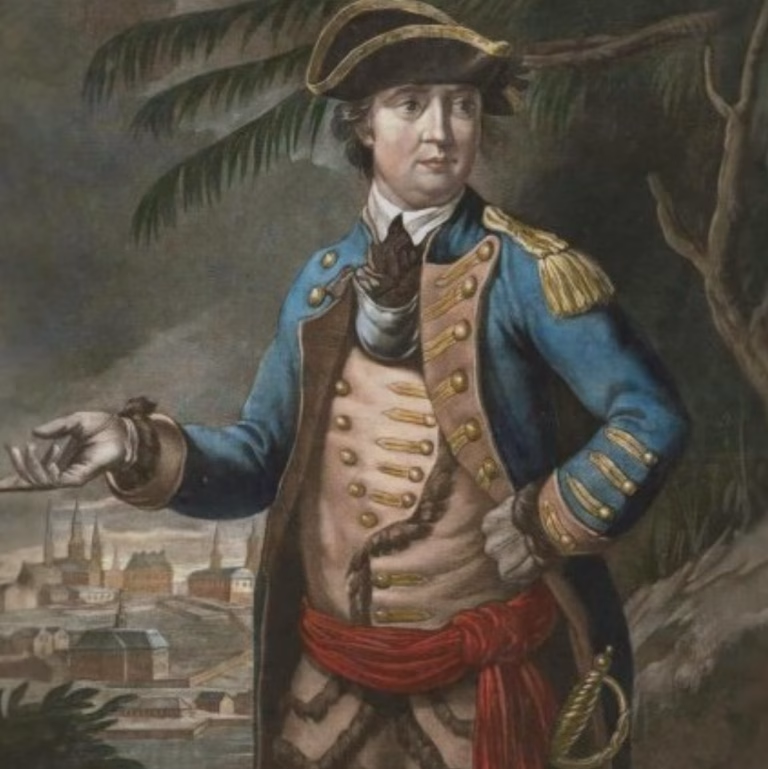
Before his name became shorthand for betrayal, Benedict Arnold was essential to the American cause.
He fought with urgency and courage that few matched. At Saratoga, his battlefield decisions helped secure one of the most important victories of the war—one that convinced France to fully support the colonies. He suffered severe injuries. He spent his own money to support troops. His commitment, early on, was not in question.
Recognition, however, never arrived in the way he expected.
Arnold watched others receive promotions he believed he had earned. He faced investigations over finances. He carried debt and resentment in equal measure. For someone driven by pride and validation, these slights accumulated.
This is where history becomes uncomfortable. Betrayal rarely begins with ideology. It begins with grievance.
The Switch: West Point and a Calculated Gamble
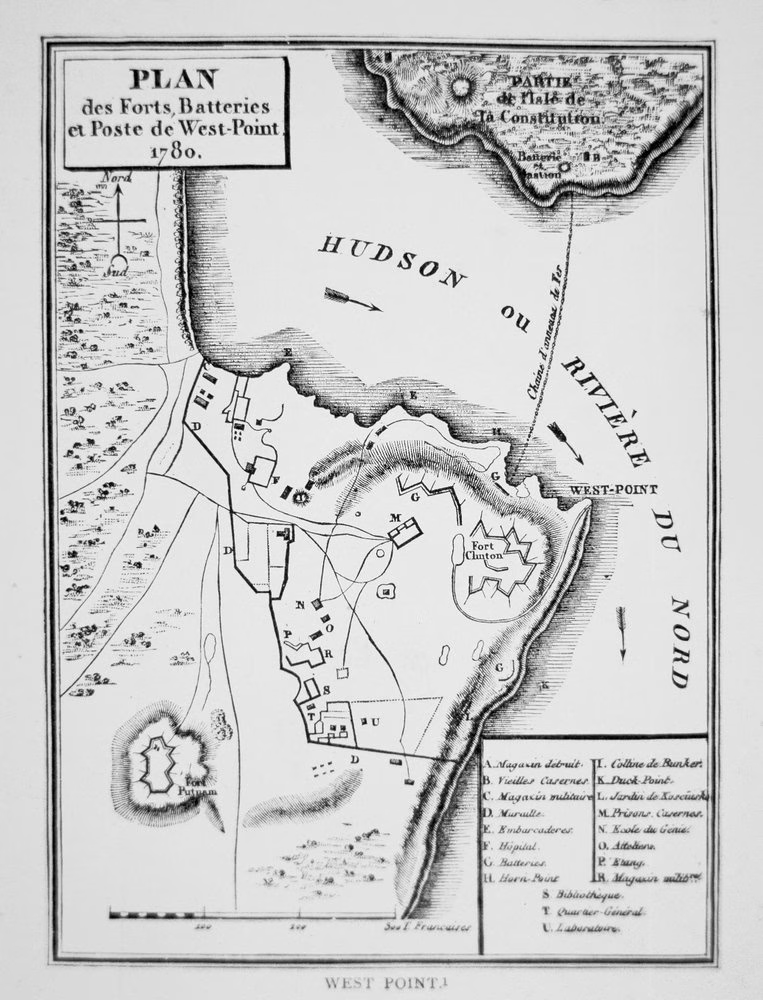
When Arnold took command of West Point, he held the most strategically important position in the colonies. The fort controlled the Hudson River. If it fell, the colonies would be split in two.
Arnold knew its value. So did the British.
Through secret correspondence—coded letters, intermediaries, and meetings—Arnold negotiated with British intelligence. Major John André became his primary contact. The plan was simple: hand over West Point in exchange for money and rank.
The plan failed because of chance.
André was captured. Papers hidden in his boot exposed the plot. Arnold fled just in time, escaping to British lines hours before Washington arrived at West Point for inspection.
One man escaped. Another paid the price.
Fallout: Loyalty Redefined
News of Arnold’s betrayal hit the colonies hard. This was not just about military security. It was about trust. If a celebrated general could switch sides, who else might?
Public outrage followed. Arnold’s name became a warning. Loyalty was no longer assumed; it was scrutinized. Patriotism took on sharper meaning: less about rhetoric, more about consistency under pressure.
Across enemy lines, Arnold found no comfort. The British used him, but they did not trust him. He received rank, but not respect. Betrayal does not translate well across borders.
Major John André, by contrast, faced execution with composure. His death drew sympathy even from opponents. History remembered him as tragic. Arnold, as transactional.
That difference mattered.
What History Keeps—and What It Teaches
Yorktown remains a defining moment because it marked the point when independence stopped being theoretical. It showed that power could be contested and won through coordination, patience, and shared sacrifice.
Arnold’s legacy endures for the opposite reason. His name survives because societies remember violations of trust more vividly than acts of courage.
For Black Americans, these stories land differently. The Revolution promised freedom while maintaining bondage. Loyalty was demanded while rights were denied. Yet the themes remain instructive. Power still depends on alliances. Progress still requires trust. And betrayal—whether personal or systemic—carries long consequences.
History does not just recount events.
It interrogates character.
Yorktown answers one question clearly: unity works.
Arnold answers another: ambition without principle collapses inward.
Both lessons still speak.