
7 Vital Daily Habits for Men Over 30 to Reclaim Energy

There is a subtle, often frustrating moment most men experience sometime after 30. You wake up, pour your usual cup of coffee, and wait for the familiar jolt of productivity. It comes but it feels weaker, shorter, and less convincing than it did five years ago.
Coffee isn’t broken; your biology has simply shifted. In your twenties, energy felt automatic. Late nights were recoverable, and stress felt like a temporary hurdle. Now, the margin for error has narrowed. The cost of neglect—poor sleep, sedentary behavior, and nutritional gaps—compounds quietly, like interest on a poorly managed credit line. High performance after 30 isn’t about grinding harder; it’s about bio-harmony. It is the art of building systems that support hormonal health, cognitive clarity, and physical presence for decades, not just fiscal quarters.
The Biological Shift: Testosterone and Performance After 30

The transition into your thirties marks a fundamental shift in male physiology. Research from the Lancet Healthy Longevity indicates that muscle mass and metabolic efficiency begin a slow, baseline decline unless actively countered. More importantly, testosterone, the primary driver of male drive, muscle retention, and mood stability, tapers at an average rate of 1% per year after age 30.
Ignoring this reality doesn’t cancel it. Men in this bracket often confuse “busy-ness” with performance. Productivity is just motion: emails sent and tasks crossed off. True high performance is output with clarity. It is the ability to deliver a high-stakes presentation at 9 a.m. and still have the emotional bandwidth to be present for your family at 7 p.m. To achieve this, you must move away from relying on willpower, which fluctuates with your mood, and move toward Metabolic Resilience.
Morning Routine for Men: Calibrating Cortisol and Hydration

The first 60 minutes of your day are a “neurological anchor.” Most men reach for their phones immediately, triggering a state of “digital reactivity” that fragments their focus for the rest of the day. To master your morning, you must prioritize Circadian Rhythm Anchoring.
Hydrate Before You Stimulate: Overnight, your blood thickens due to dehydration, which dulls cognitive speed. Drinking 16–20 ounces of water with a pinch of sea salt restores electrolyte balance and often provides the “wakefulness” people mistakenly attribute to coffee.
The 90-Minute Caffeine Rule: Emerging 2026 research suggests delaying caffeine for 60–90 minutes after waking. This allows your natural Cortisol Awakening Response (CAR) to peak and clear adenosine (the “sleepiness” chemical) naturally. Stacking coffee on top of a cortisol peak leads to the inevitable 2 p.m. crash.
Circadian Lighting: Spending just 5–10 minutes in natural morning sunlight triggers the release of serotonin and sets a timer for melatonin production 16 hours later. It is the single most effective “free” biohack for better sleep.
The Strength Insurance: Why Muscle is Your Primary Asset
After 30, the goal of training shifts from aesthetics to metabolic insurance. Muscle tissue is a highly active endocrine organ; it helps regulate blood sugar, supports joint longevity, and maintains insulin sensitivity.
Resistance Training: You don’t need two-hour gym sessions. Three 45-minute sessions of compound movements (squats, deadlifts, presses) are sufficient to signal your body to maintain testosterone production.
Zone 2 Cardio: This is “low-intensity” steady-state cardio where you can still hold a conversation. It increases mitochondrial density—the “powerhouses” of your cells—without the massive recovery tax of high-intensity interval training (HIIT).
Functional Mobility: Addressing tight shoulders and lower back pain isn’t a luxury; it’s a requirement for staying “in the game.”
Nutrition Strategy: Fueling for Clarity and Metabolic Flexibility

Nutrition after 30 is no longer about “eating less”; it’s about Metabolic Flexibility, the body’s ability to switch efficiently between burning carbohydrates and fats for fuel.
The Protein Priority: Aim for 0.8g to 1g of protein per pound of body weight. Protein has the highest thermic effect (burning more calories to digest) and is essential for preventing age-related muscle loss (sarcopenia).
Managing the Glucose Spike: That 3 p.m. brain fog is often a “glucose crash” caused by a high-carb lunch. Pairing carbohydrates with fiber, fats, and protein slows digestion and keeps your brain fueled with a steady stream of energy.
Smart Supplementation: While “fundamentals first” is the rule, 2026 health trends highlight Magnesium Bisglycinate for muscle relaxation and Vitamin D3/K2 for bone and hormonal support as the “essential trio” for the modern professional.
Deep Work and Focus: Protecting Your Peak Energy Cycles
The modern work culture is a war on your attention. High-performing men protect their “deep work” blocks like they protect their bank accounts. This is based on Ultradian Rhythms, the 90-minute cycles of focus our brains are naturally wired for.
Monotasking: Multitasking is a myth that reduces IQ by 10 points. Choose one high-leverage task and commit to it for 90 minutes.
Environmental Friction: Keep your phone in another room during your peak focus hours. The mere presence of a smartphone, even if face down, reduces “available cognitive capacity.”
Active Recovery: Every 90 minutes, step away. A 5-minute walk or a “Non-Sleep Deep Rest” (NSDR) session clears metabolic waste from the brain, allowing for a second and third peak of focus later in the day.
Stress Mastery: Cortisol Recovery as a Competitive Advantage
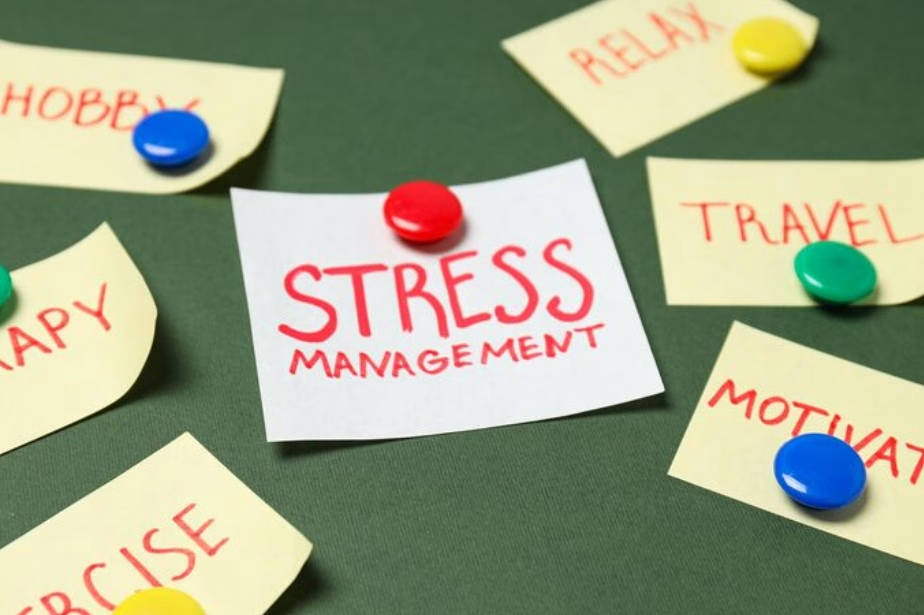
In your 20s, stress was something you pushed through. In your 30s, chronic stress (elevated cortisol) is a “testosterone killer.” It leads to visceral fat gain (the “dad bod”) and mental burnout.
Leadership after 30 requires emotional regulation. People trust stability. To maintain that stability, you must view recovery as an active process, not just “not working.” Techniques like box breathing or cold exposure (Hormetic Stress) train your nervous system to stay calm under pressure. When you can regulate your stress, you aren’t just more productive, you’re more persuasive.
The Evening Wind-Down: Closing the Loop for Longevity
Tomorrow begins the night before. High performers use an “Evening Shutdown Ritual” to signal to their nervous system that the day’s “war” is over.
The 3-2-1 Rule: Stop eating 3 hours before bed, stop work 2 hours before bed, and stop screens 1 hour before bed.
Temperature Control: Your body needs to drop its core temperature by 2–3 degrees to initiate deep sleep. Keep your room cool (around 65°F/18°C).
Mental Offloading: Writing down your “top 3” tasks for tomorrow clears the “open loops” in your brain that cause middle-of-the-night wakefulness.
Conclusion: Identity Over Motivation
Thirty-day challenges are appealing because they provide urgency, but high performance is not seasonal. It is an identity. When you see yourself as a man who trains, plans, rests, and leads, your behavior follows naturally. You stop asking if you “feel motivated” and start acting according to your standard.
Coffee will always have its place, it’s a ritual and a comfort. But after 30, it cannot be your foundation. Structure, recovery, and a clear sense of identity are what will carry you through the next three decades with energy that isn’t just borrowed, but earned.