
Challenges of Maintaining Friendships After 30

There’s a moment, quiet, almost easy to miss, when friendship stops feeling automatic.
No one announces it. There’s no official turning point. But one day you realize the group chat has gone silent for three days… then five… then ten. Plans that used to happen on a whim now require a calendar invite. And “we should catch up soon” becomes less of a plan and more of a polite placeholder.
You still care. Deeply. That hasn’t changed.
But something else has.
When “Anytime” Turns Into “Let Me Check My Calendar”

In your 20s, time felt elastic. You could stretch it, bend it, spend it without much thought.
Now? It feels allocated. Pre-assigned. Accounted for before the week even begins.
Work isn’t just work anymore—it’s trajectory. Performance reviews, KPIs, long-term plays. You’re not just clocking in; you’re building something. And that takes focus. Energy. Headspace.
Then there’s everything else. Family. Health. Bills that seem to multiply. Some people are raising kids. Others are caring for parents. A few are juggling both, quietly carrying more than they ever expected to.
And friendships? They’re still important but they’re no longer urgent.
That’s the shift. Not a loss of care, but a reordering of pressure.
The Calendar Problem (And Why It’s Not Just About Time)
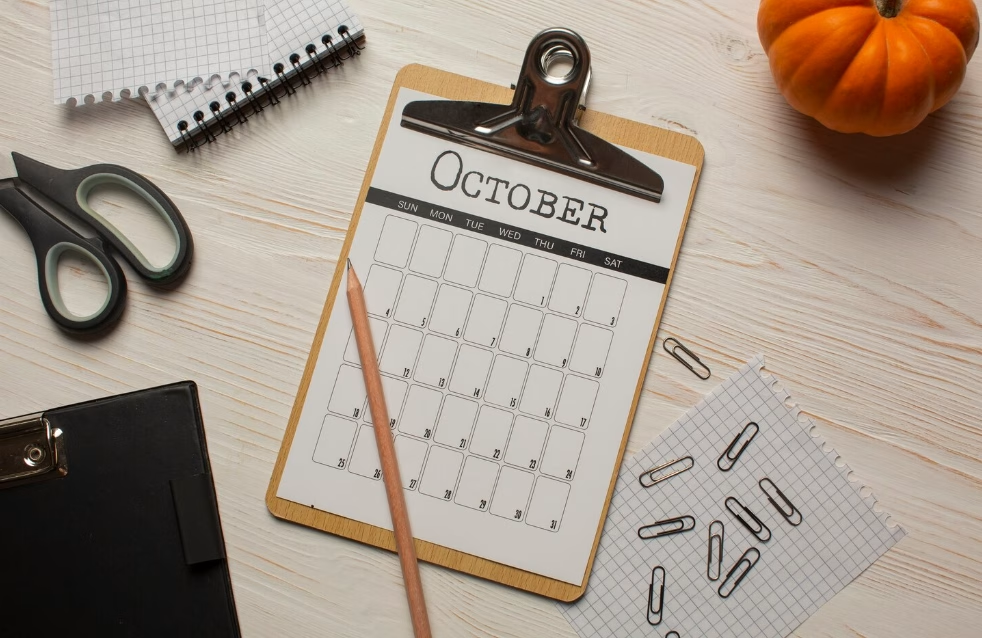
Here’s the thing: people often say, “I just don’t have time.”
But that’s not entirely true. Time exists. It’s just… spoken for.
Spontaneity becomes rare. You don’t just “grab dinner” anymore. You coordinate. You confirm. You reschedule. Sometimes twice.
And when plans fall through, it hits differently. It’s not just a missed hangout, it’s a missed slot in an already crowded life.
But beneath all that logistics is something more subtle: exhaustion.
Not dramatic burnout. Just a steady, low-grade fatigue. The kind that makes even things you enjoy feel like they require effort.
You want to see your friends. You really do.
You’re just… tired.
Distance Isn’t Just Physical Anymore

At some point, people start moving. For work. For better opportunities. For a fresh start.
One friend relocates across the country. Another takes a job abroad. Suddenly, the people who used to be ten minutes away now live in different time zones.
And sure, technology helps. You’ve got FaceTime, WhatsApp, voice notes that stretch a few minutes longer than necessary.
But let’s be honest: digital connection isn’t the same as physical presence.
You don’t bump into each other anymore. There are no accidental hangouts. Everything has to be planned, and planning requires effort.
There’s this idea people like to repeat: “If the friendship is real, distance won’t matter.”
It sounds nice. It’s comforting.
But it’s not entirely true.
Distance doesn’t break strong friendships, but it does test them. It asks for consistency. It demands intention. And not everyone can meet that demand all the time.
When Life Paths Stop Matching Up
This part catches people off guard.
Because no one prepares you for how different your lives and your priorities can become in your 30s.
One friend gets married. Another is focused on their career. Someone else has two kids and hasn’t slept properly in months. And then there’s you, somewhere in between, trying to make sense of your own timeline.
None of these paths are wrong. But they are different.
And difference creates friction, not loud, obvious conflict, but subtle disconnection.
Conversations change. Availability shifts. The things that used to bond you, shared routines, inside jokes, similar schedules, start to fade.
Even money plays a role, though people rarely say it out loud.
- One friend is booking flights for weekend trips
- Another is budgeting carefully, declining invitations more often
- Someone else is somewhere in the middle, trying to keep up without overextending
No one wants to make it awkward. So instead, people adjust quietly. They pull back. They say “next time” a little more often.
And over time, those small adjustments add up.
The Way You Talk Changes (Or Stops Altogether)
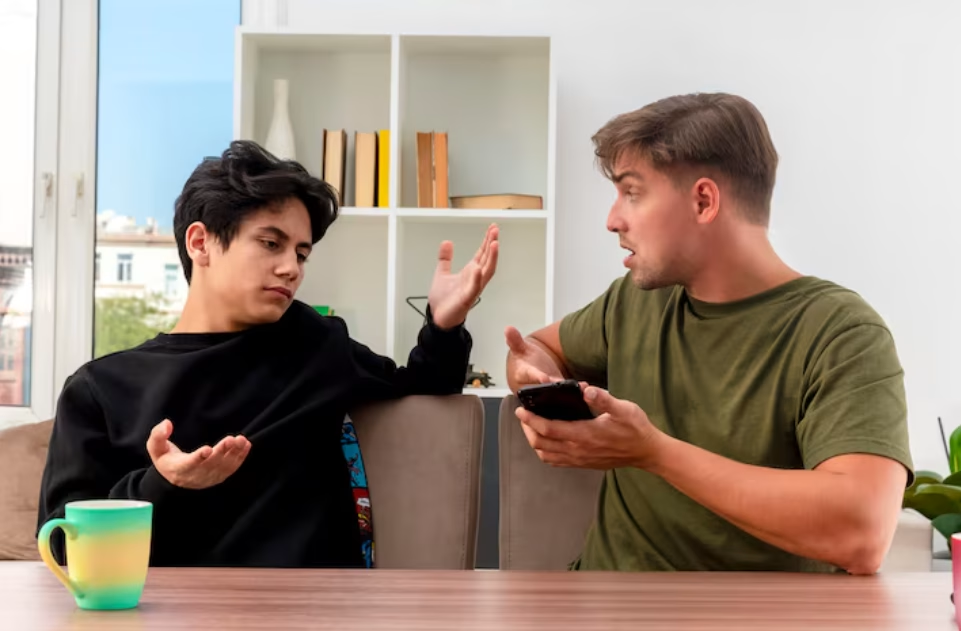
Communication evolves. Not always for the better.
Calls turn into texts. Texts turn into reactions. And sometimes, even those fade into silence.
It’s not intentional. It’s just… efficient.
A quick message feels easier than a long conversation. You can reply when you have a moment: between meetings, while waiting in line, late at night when everything finally slows down.
But something gets lost in that efficiency.
Tone. Depth. The little pauses that make a conversation feel real.
You end up exchanging updates instead of actually connecting.
“I got promoted.”
“I moved.”
“I’ve been busy.”
Important, yes. But incomplete.
And then there’s social media, the great illusion of closeness.
You see their posts. You like their photos. You know what’s happening in their life, at least on the surface.
It feels like you’re still connected.
But you’re not really talking. Not in a way that matters.
Growth Changes You—And That Changes Everything
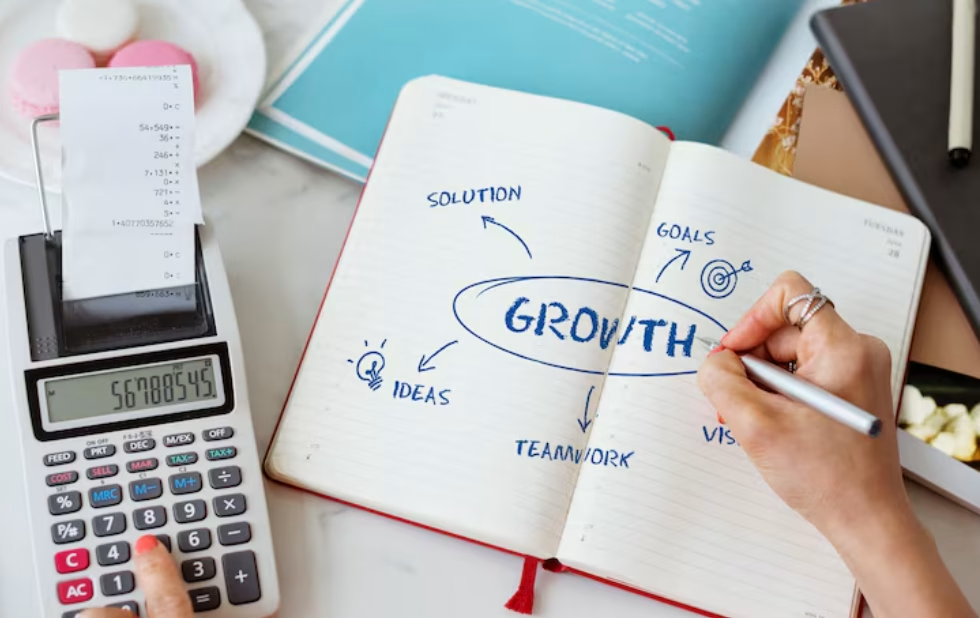
Here’s a hard truth: you’re not the same person you were ten years ago.
Your priorities have shifted. Your tolerance for certain things has changed. Your values have become clearer, more defined.
And that’s a good thing. It really is.
But growth has consequences.
Sometimes you outgrow certain habits—late nights, impulsive decisions, patterns that no longer fit your life. And when those habits were the foundation of a friendship, things can feel… off.
Other times, the shift runs deeper.
You start to see the world differently. You make decisions based on a new set of principles. And occasionally, those principles don’t match your friend’s anymore.
It’s not dramatic. It’s not confrontational.
It’s just… different.
This is where boundaries come in. And boundaries are tricky.
You want to protect your time, your energy, your peace, but you don’t want to push people away.
So you adjust. You communicate more clearly. You say no when you need to.
And sometimes, despite your best efforts, the friendship changes anyway.
Some relationships evolve. They adapt. They find a new rhythm.
Others don’t. They fade slowly, without a clear ending.
That part can feel heavy. But it’s also part of growing up.
So What Actually Works? (Making Friendships Stronger, Not Just Longer)

If all of this sounds a little bleak, it’s not meant to.
Because here’s the other side of it: the part people don’t talk about enough.
Friendships in your 30s can be deeper. Stronger. More intentional than anything you had before.
But they don’t happen by accident anymore.
You have to choose them.
You have to decide that this person matters enough to make time for, even when it’s inconvenient. Especially when it’s inconvenient.
That might look like:
- Scheduling a monthly call and actually sticking to it
- Sending a quick voice note instead of a text
- Planning a trip months in advance and committing to it
- Checking in with a real question, not just “What’s up?”
It’s not about grand gestures. It’s about consistency.
And maybe more importantly, it’s about letting your friendships evolve.
The way you connected at 22 doesn’t have to be the way you connect now.
Maybe it’s less frequent, but more meaningful.
Maybe it’s quieter, but more honest.
Maybe it’s different but still valuable.
That’s the shift.
Friendship after 30 isn’t about proximity or convenience. It’s about intention.
And once you accept that, once you lean into it instead of resisting it, something changes.
The friendships that remain don’t just last.
They deepen.