
How to Start a Gym as a Beginner Female?

Walking into a gym for the first time can feel like stepping onto unfamiliar terrain. Bright lights. The sound of metal plates clinking. Mirrors everywhere.
You might pause at the entrance and think, Do I even belong here?
That hesitation is normal. It’s not weakness. It’s newness. And new environments tend to amplify self-awareness.
But here’s something important: every strong woman you see lifting confidently once stood exactly where you are. Unsure. Observing. Deciding.
Starting the gym isn’t just a physical decision. It’s psychological. And the internal shift happens before the first squat ever does.
Start With Your “Why” Before You Start With Weights
Before choosing a workout plan, clarify your goal.
Do you want to lose body fat? Build strength? Improve energy levels? Feel more confident in meetings, in photos, in your own skin?
Specific goals create structure. “I want to get healthier” is admirable but vague. “I want to train three times per week and increase my lower-body strength” is actionable.
Research from the American College of Sports Medicine shows that individuals with defined, measurable goals are significantly more likely to maintain exercise habits long term. Structure reduces decision fatigue.
And it matters because motivation fluctuates. Your reason must be stronger than your mood.
There’s also a subtle mental shift here. Instead of viewing the gym as punishment for how you look, see it as training for how you want to feel.
That difference changes everything.
Choosing a Gym That Fits You, Not Instagram
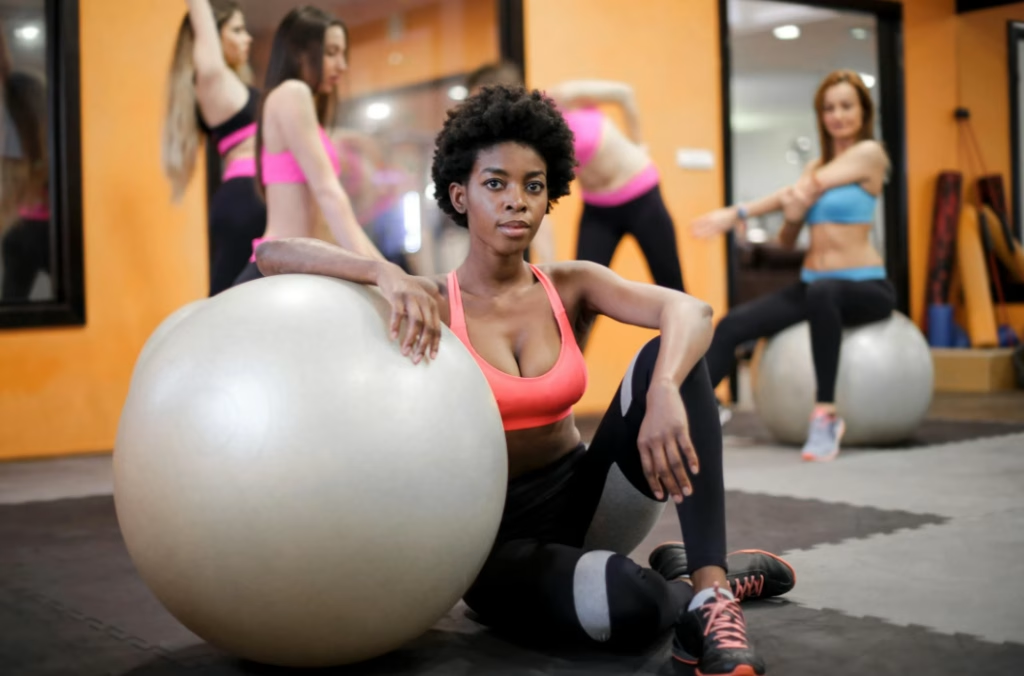
Not every gym is right for every woman.
Some facilities feel industrial and performance-driven. Others resemble wellness studios with eucalyptus-scented towels and curated playlists. Neither is superior. What matters is whether you’ll return.
Proximity matters more than prestige. A modest gym ten minutes away will outperform an upscale facility across town if convenience lowers resistance.
Visit at the time you plan to train. Notice the atmosphere. Are staff approachable? Are there enough beginner-friendly machines? Is the environment clean and organized?
Slight discomfort is normal. Chronic intimidation is not.
Your gym should feel like a place you can grow not a place you have to survive.
What You Actually Need (Hint: Less Than You Think)
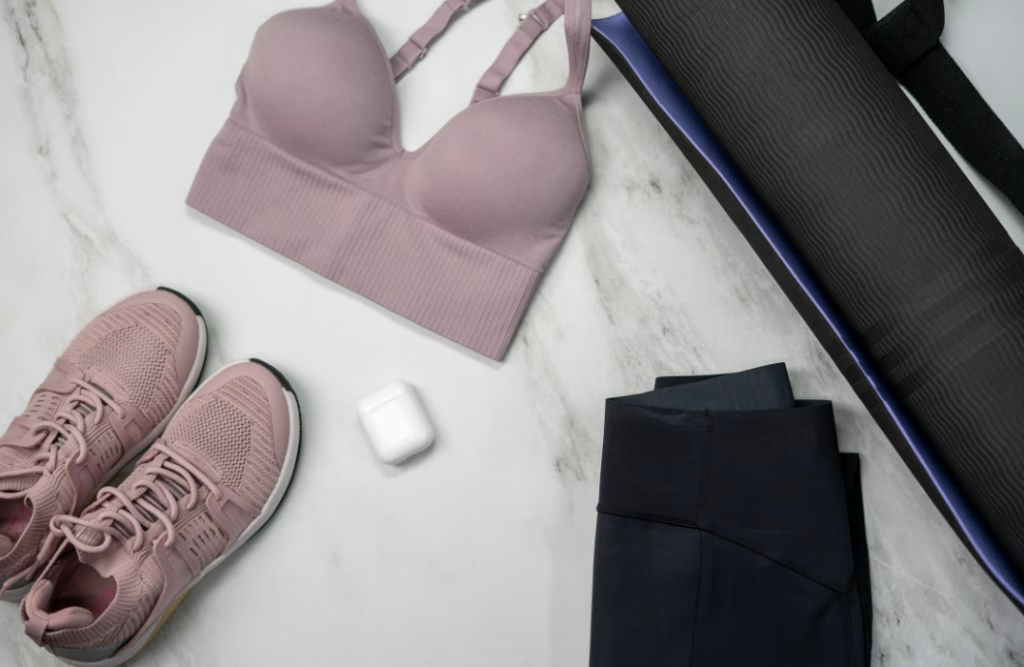
The fitness industry thrives on accessories. But beginners require simplicity.
Wear breathable clothing that allows movement. High-waisted leggings that stay in place. A supportive sports bra. Athletic shoes suited to your activity: running shoes for cardio, flatter soles for strength training.
You do not need a coordinated set. You need comfort.
Bring water. A small towel. Headphones if you prefer focus.
That’s it.
When you remove unnecessary complexity, you reduce friction. And friction is often what derails consistency.
Your First Week: Keep It Simple
Ambition is admirable. Overloading your schedule is not.
For beginners, training three non-consecutive days per week works well. Monday, Wednesday, Friday. Or Tuesday, Thursday, Saturday. Recovery between sessions supports muscle repair and nervous system adaptation.
Each workout can follow a simple full-body structure:
- A lower-body push (squats or leg press)
- A lower-body hinge (Romanian deadlifts)
- An upper-body push (push-ups or chest press)
- An upper-body pull (rows or lat pulldowns)
- A core exercise (planks)
Forty-five to sixty minutes is sufficient.
And here’s the part many overlook: focus on form before weight. Early strength gains come largely from neural adaptation, your brain learning how to recruit muscle fibers efficiently. That’s not visible in the mirror. But it’s real.
You are building coordination. Stability. Control.
The aesthetic results follow.
Strength Training vs. Cardio: What Actually Works?
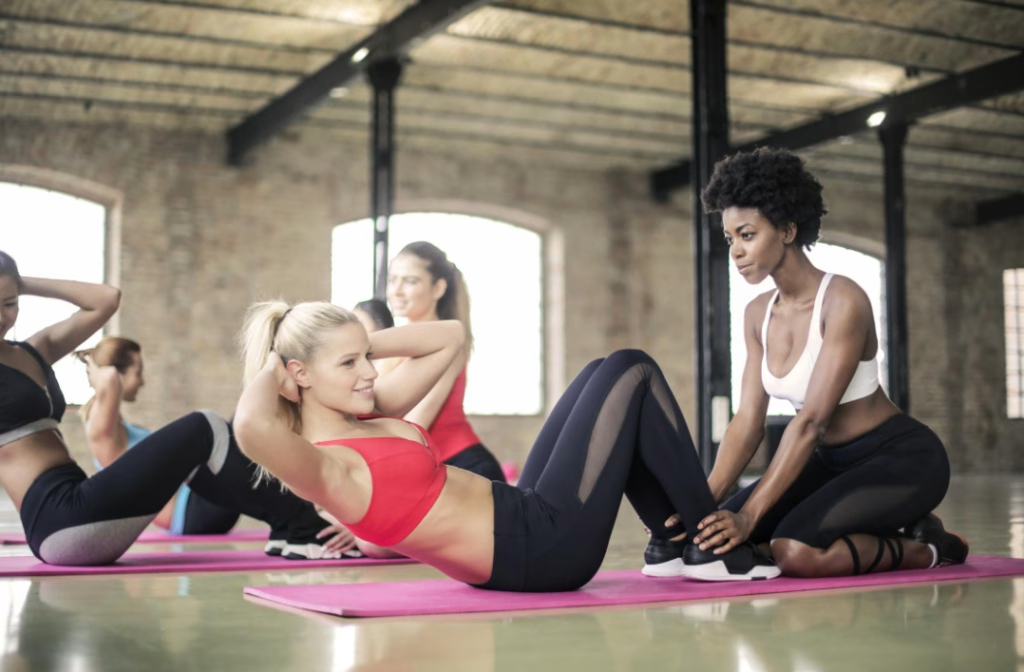
This debate often confuses beginners.
Cardio improves cardiovascular health. It strengthens the heart, enhances lung capacity, and supports calorie expenditure. It’s valuable.
Strength training builds muscle tissue, improves bone density, and increases resting metabolic rate. It reshapes the body.
Women sometimes fear lifting heavy weights will make them bulky. Physiologically, that concern is misplaced. Muscle growth requires sustained calorie surplus and significant hormonal stimulus, conditions not typically met in standard beginner routines.
What lifting does create is firmness. Postural improvement. Structural support.
A balanced approach works well:
- Strength training three times per week
- Moderate cardio one to two times per week
Brisk walking, cycling, incline treadmill sessions, these are effective without being exhaustive.
More is not always better. Sustainable is better.
Nutrition: Fuel, Don’t Restrict
Starting the gym often triggers an urge to drastically cut calories. That approach feels disciplined. It rarely lasts.
Severe restriction slows metabolism, increases hunger hormones, and often leads to rebound overeating. It’s a biological response, not a character flaw.
Instead, focus on structure.
Aim for protein at each meal. Roughly 1.2 to 1.6 grams per kilogram of bodyweight per day supports muscle repair and development. Sources can include chicken, fish, eggs, tofu, Greek yogurt, legumes, or a reputable protein powder such as Optimum Nutrition or MyProtein if convenience is needed.
Pair protein with vegetables, whole-food carbohydrates, and healthy fats.
Hydration matters more than many realize. Even mild dehydration can reduce workout performance and increase perceived fatigue.
And yes, enjoy occasional treats. Rigidity fractures adherence. Consistency builds it.
Managing Gym Anxiety (Because It Happens)
Feeling watched is common. Psychologists call it the spotlight effect—the tendency to overestimate how much others notice us.
Most people at the gym are focused on their own routine.
If anxiety spikes, start with machines. They guide movement and feel less exposed than free weights. Train during off-peak hours if your schedule allows. Wear headphones. Create a small psychological boundary.
Exposure reduces fear. Repetition normalizes the environment.
Confidence doesn’t arrive before action. It grows because of it.
When Progress Slows (And It Will)
Plateaus are part of adaptation.
If strength stalls, examine recovery. Are you sleeping enough? Eating sufficient protein? Managing stress? Chronic stress elevates cortisol, which can interfere with recovery and body composition.
Sometimes increasing weight slightly is enough. Sometimes a short deload week reducing intensity temporarily, restores progress.
Avoid changing programs weekly. The body requires repeated stimulus to adapt.
Think of training like learning a language. You don’t become fluent by switching textbooks every three days.
Progress Beyond the Scale
The scale measures total mass. Not composition.
As you gain muscle and lose fat simultaneously, weight may remain stable. This can feel discouraging until you notice your clothes fit differently, your posture improves, and your stamina increases.
Track strength gains. Take progress photos monthly. Measure waist and hip circumference. Monitor energy levels.
Strength is tangible. If you move from 5 kg dumbbells to 10 kg with good form, that is measurable progress.
And it matters.
The First 90 Days: Building Identity
Three months of consistent training changes more than muscle tissue.
You begin to see yourself differently.
You schedule workouts without debate. You notice you stand taller in professional settings. You feel steadier presenting in meetings. Physical strength often translates into psychological steadiness.
The changes may be subtle. But they accumulate.
Small wins compound:
- The first unassisted push-up
- The first time you increase weight confidently
- The first week you train even when you didn’t feel like it
These moments reinforce identity.
You are no longer someone trying to start the gym.
You are someone who trains.
Realistic Expectations (And Why They Matter)
Visible changes typically begin around the 8–12 week mark with consistent effort. Earlier improvements are often neurological and internal.
Fat loss, when pursued moderately, may average 0.25–0.75 kg per week depending on individual variables. Rapid change is usually temporary.
There will be imperfect weeks. Travel. Work deadlines. Illness.
Two workouts instead of three still count.
Progress is not erased by interruption. It’s sustained by return.
Final Thoughts: Strength as a Lifestyle
Starting the gym as a beginner female is less about equipment and more about mindset. Less about intensity and more about consistency.
You do not need to overhaul your life overnight. You need structured repetition. Reasonable expectations. Adequate fuel. And patience.
Strength builds gradually. Quietly.
And one day, without ceremony, you will realize that the gym no longer feels intimidating. It feels familiar.
You walk in. You train. You leave stronger than you arrived.
That’s how it begins.
And that’s how it lasts.