
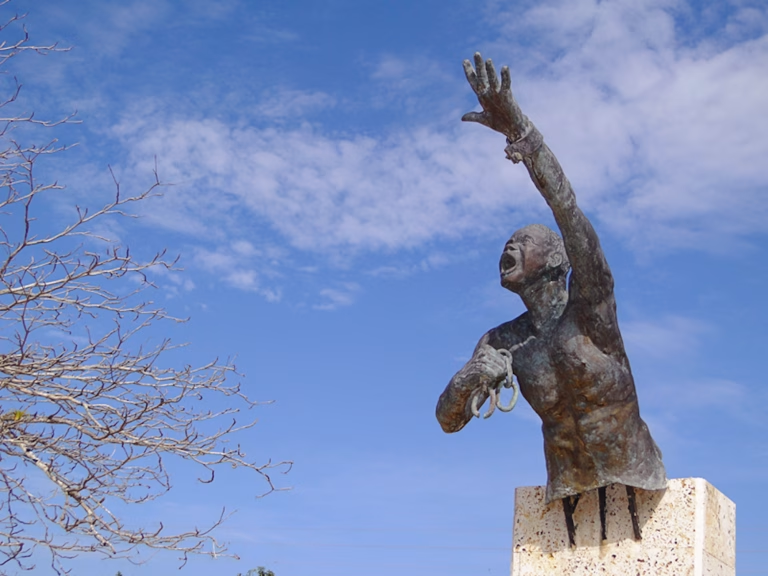
Freedom Didn’t Arrive Here. It Was Built.
Freedom stories are often told as endings. A law passed. A proclamation signed. A moment frozen in textbooks.
San Basilio de Palenque disrupts that framing entirely.
This story doesn’t begin with permission. It begins with refusal.
Deep in the interior of what is now northern Colombia, far from colonial plazas and slave markets, a group of formerly enslaved Africans created something the Spanish Empire insisted could not exist: a permanent, self-governing Black town. Not a hiding place. Not a temporary camp. A functioning society that outlived its founder and forced an empire to negotiate.
That fact alone should stop you.
For Black Americans, especially those accustomed to seeing resistance portrayed as reactive or fragmented, Palenque offers a different lineage, one rooted in planning, governance, and cultural continuity. This wasn’t chaos dressed up as rebellion. It was order under pressure.
And at the center of it stood Benkos Biohó.
The Slave System That Made Palenque Necessary
The Spanish colonial economy in the Americas ran on human extraction. Cartagena de Indias became one of the busiest ports for enslaved Africans, feeding mines, plantations, and households across the region. The violence wasn’t incidental. It was administrative. Punishments were public. Control was psychological as much as physical.
Yet systems built on domination tend to overestimate their permanence.
Escapes happened not often, not easily, but enough to cause concern. Some of those who fled did not wander aimlessly. They organized. They disappeared into forests and wetlands that European soldiers struggled to navigate. These escapees became maroons, and their settlements became palenques.
A palenque wasn’t just a refuge. It was a political threat.
Why Escape Wasn’t Desperation. It Was Strategy
Running away from slavery has often been framed as a last resort. In reality, it was frequently a calculated move, planned communally and executed with precision.
Escaped Africans carried knowledge with them: agriculture, military tactics, spiritual systems, leadership structures. Many had lived within complex African societies long before captivity. Enslavement interrupted geography, not intellect.
Choosing the forest over bondage wasn’t reckless. It was rational.
And once escape succeeded, survival required something more demanding than courage: discipline.
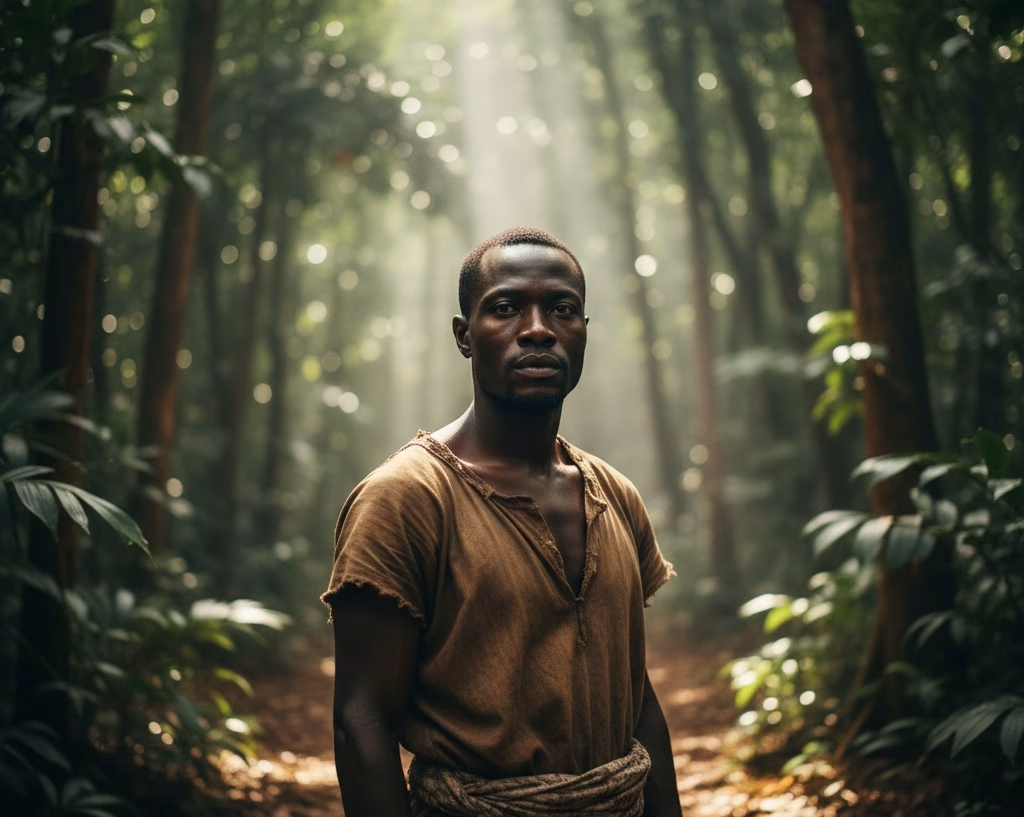
Benkos Biohó Did Not Stumble Into Leadership
Benkos Biohó’s background matters. Historical accounts suggest he came from West Central Africa and may have held elite or noble status before capture. That context explains a lot. His command presence, his ability to organize people from different ethnic groups, his understanding of negotiation and warfare.
After being enslaved near Cartagena, Biohó orchestrated an escape that brought others with him. That detail is crucial. Lone fugitives vanish. Leaders multiply.
He organized patrols. Established defensive perimeters. Set rules. Palenque wasn’t run on charisma alone. It ran on structure.
Spanish forces tried repeatedly to destroy the settlement and failed. Forest terrain favored guerrilla tactics. Intelligence traveled faster than colonial troops. The empire encountered a problem it couldn’t discipline away.
Eventually, Spanish authorities shifted tactics. They negotiated.
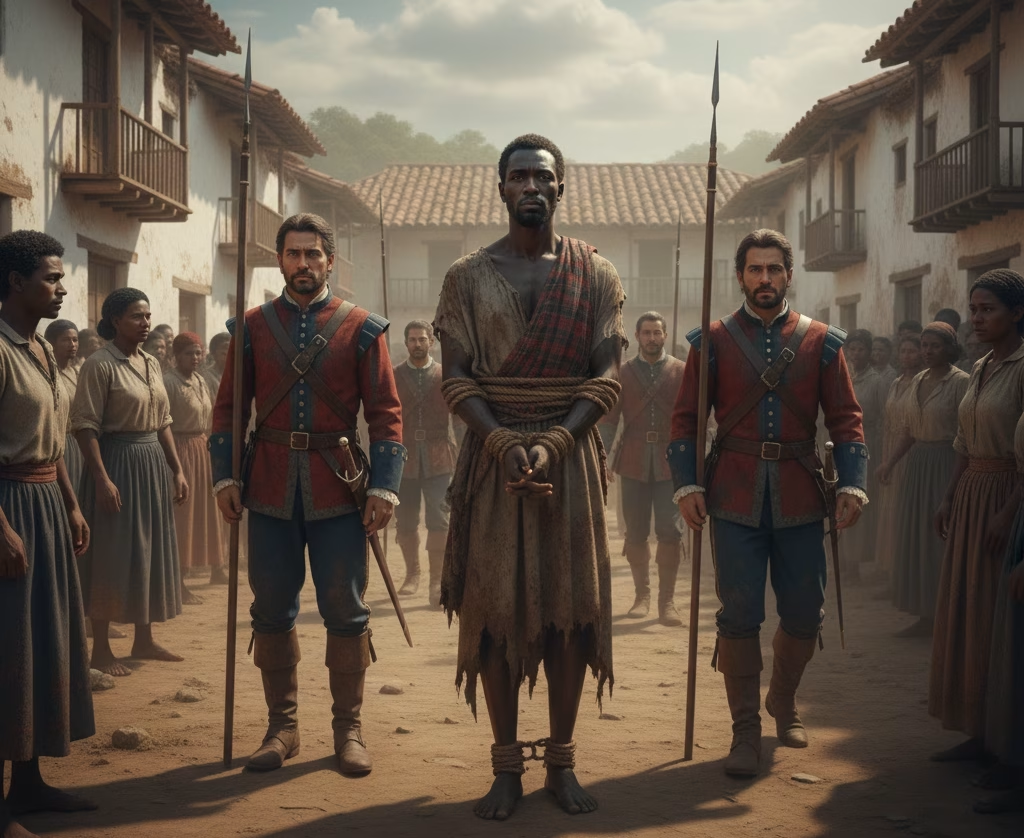
Betrayal Didn’t End the Movement
The Spanish Crown formally recognized Palenque’s freedom—an extraordinary concession. But recognition came with fear. Biohó’s influence extended beyond Palenque. He symbolized a future the colonial system could not control.
He was lured into Cartagena under the guise of diplomacy. Arrested. Executed in 1621.
Empires often assume killing the leader kills the idea. Palenque proved otherwise.
The community endured. Governance held. Culture carried forward. The system Biohó built outlived him.
That survival is the real measure of leadership.
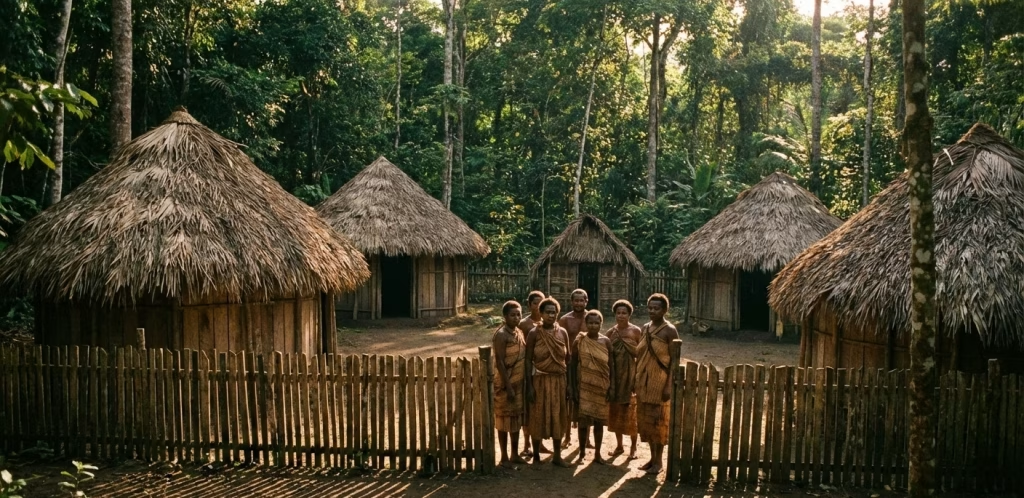
How Palenque Functioned as a Town, Not a Myth
San Basilio de Palenque worked because it was engineered to work.
Its location was deliberate: dense forest, swampy ground, narrow access points. These weren’t accidental defenses. They were chosen with intention. Lookouts monitored movement. Escape routes were memorized. Everyone understood their role.
Inside the town, daily life was communal but ordered. Labor was shared. Decisions weren’t arbitrary. Leadership answered to the collective need for survival and continuity.
This wasn’t utopia. It was governance under threat.
And it lasted.
That longevity is why Palenque holds a unique place in history. It didn’t collapse after a generation. It became intergenerational. Children were born free. That matters.
Culture Did the Work Weapons Couldn’t
Here’s where Palenque becomes extraordinary.
Freedom doesn’t last on defense alone. It lasts when identity holds.
Palenquero, the local creole language, blended Spanish vocabulary with African grammatical structures. It wasn’t a linguistic accident. It allowed communication beyond colonial comprehension. Language created privacy, belonging, and memory.
Music reinforced that bond. Drums, rhythms, call-and-response patterns carried history when writing was unsafe or inaccessible. Spiritual traditions preserved African cosmology beneath adapted forms. Food, ceremony, and storytelling stitched generations together.
Culture wasn’t decoration. It was insurance.
Memory as Infrastructure
Palenque relied on oral history. Stories of escape. Stories of Benkos Biohó. Stories explaining why the town existed and what it demanded from its people.
Those stories taught strategy. They taught values. They taught vigilance.
When culture transmits purpose, freedom stops being fragile.
That’s why Palenque didn’t fade into assimilation.
Why Palenque Still Matters
In 2005, UNESCO recognized San Basilio de Palenque for its cultural significance. But its relevance runs deeper than formal acknowledgment.
For Black Americans navigating conversations about freedom, resistance, and identity, Palenque complicates the narrative. It shows Black communities as planners, governors, and cultural architects, not merely survivors of oppression.
It also reminds us that liberation without structure rarely endures.
The Lesson That Refuses to Expire
San Basilio de Palenque forces a reckoning.
Freedom wasn’t gifted here.
It wasn’t temporary.
And it wasn’t accidental.
It was claimed. Maintained. Protected through culture, governance, and collective memory.
Benkos Biohó did not live to see Palenque’s full legacy. But leadership isn’t measured by lifespan. It’s measured by durability.
Palenque still stands.
And that may be the most unsettling truth of all—for any system built on the assumption that Black autonomy cannot last.