
Golf Simulators: Are They Worth Buying in 2026?
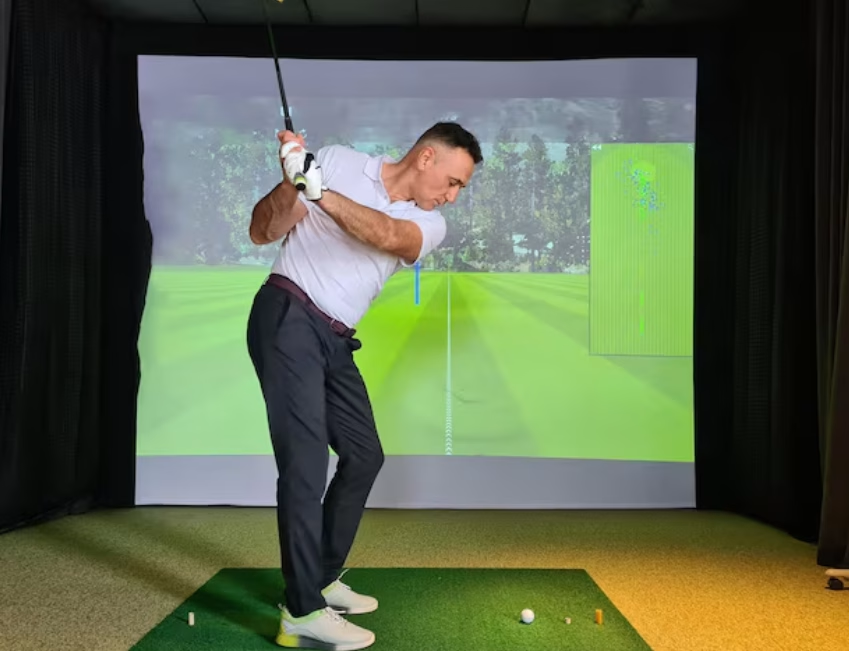
The New Reality of Golf Practice in 2026
There was a time when golf practice meant driving to a range, buying a bucket of balls, and hoping your swing “felt right” by the end of it. That rhythm still exists, of course. But it’s no longer the only option, and for many, not even the preferred one.
Golf simulators have quietly shifted from niche luxury to something far more practical. Garages, spare rooms, even converted basements are becoming miniature indoor courses. Not flashy, not exaggerated. Just functional spaces where people swing a club without checking the weather first.
The question naturally follows: are they actually worth it? Or are they just expensive tech furniture with a golf label?
The answer depends less on the technology itself and more on how you play the game.
What a Golf Simulator Really Is (Beyond the Glossy Screens)
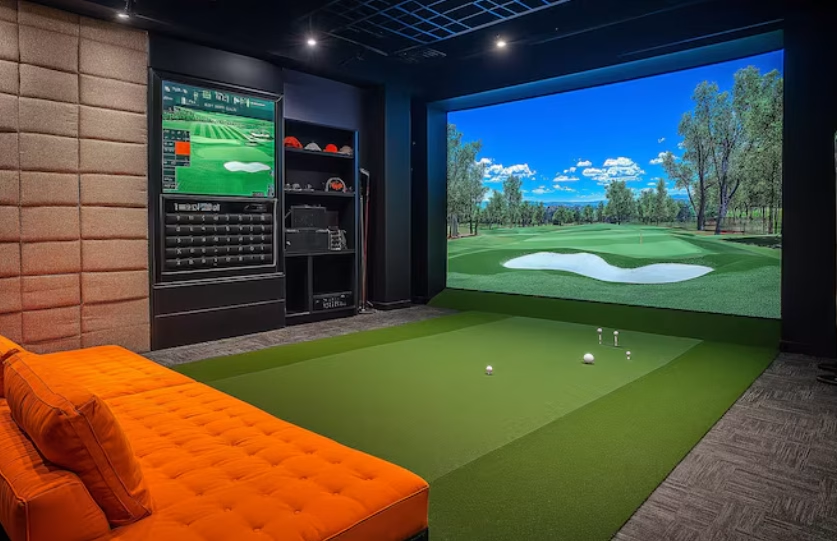
At its core, a golf simulator is a feedback environment. You swing, it captures data, and it reconstructs your shot in a virtual space. Simple in concept. Surprisingly complex in execution.
A typical setup includes:
- A launch monitor tracking ball speed, spin, and launch angle
- Impact screens or nets that absorb real shots
- Projectors or displays that render virtual courses
- Software that translates raw data into playable environments
Systems like TrackMan or Foresight Sports sit at the higher end of the spectrum, often used by coaches and professionals. On the more accessible side, devices like SkyTrak or ecosystem tools from Garmin bring simulation closer to everyday golfers.
Software matters just as much. Platforms such as E6 Connect or The Golf Club 2019 turn numbers into playable golf. Real courses, virtual tournaments, even practice ranges with shot dispersion maps.
It’s part science lab, part golf course, part video game.
Why Golf Simulators Are Gaining Serious Attention
Practice Without Weather Interruptions
Rain, heat, traffic, daylight—it all disappears indoors. You can practice at midnight or early morning before work. That consistency alone changes how people improve.
There’s something subtle here: repetition without friction. And that matters more than most golfers expect.
Immediate Feedback Changes the Learning Curve
Instead of guessing what went wrong, you see it instantly. Club path off by 3 degrees? It shows. Spin too high? It registers.
That kind of feedback shortens the learning loop. You don’t wait a week to fix a swing flaw. You adjust on the next shot.
It feels almost clinical at times. Not emotional. Just data meeting motion.
Entertainment That Doesn’t Feel Like Practice
This is where many buyers get surprised.
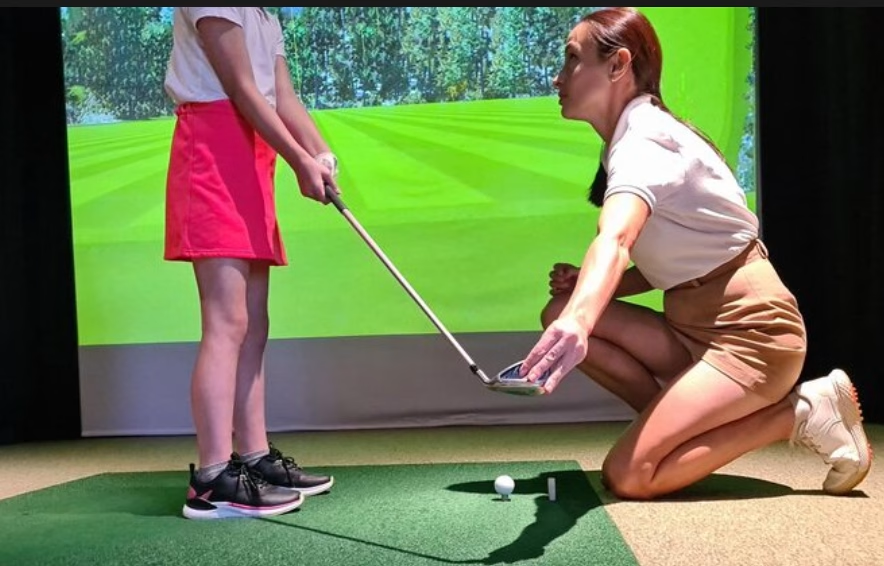
Simulators aren’t only for drills. They become social spaces. Friends play virtual rounds together. Families compete casually. Some people even host small weekend tournaments indoors.
It’s golf, but loosened. Less rigid. More flexible.
The Financial Angle Most People Miss
A full simulator feels expensive at first glance. No sugarcoating that.
But compare it with years of:
- Driving range sessions
- Green fees
- Travel costs
- Time lost between rounds
For frequent golfers, the math starts to bend. Slowly, but noticeably.
So the real question becomes not just “Is it expensive?” but “How often would I actually use it?”
That distinction matters more than price alone.
The Downsides That Don’t Get Enough Attention

Cost Is Still a Real Barrier
Even mid-range setups can feel heavy on the wallet. High-end systems? Easily into premium territory.
And it doesn’t end at purchase. Software subscriptions, accessories, calibration tools—these accumulate quietly over time.
Nothing dramatic. Just steady.
Space Isn’t Negotiable
A simulator demands room. Not just floor space, but ceiling clearance and swing freedom.
Many people underestimate this. Until they try to swing a driver indoors and realize the ceiling is… closer than expected.
Realism Has Limits
Even the most advanced systems can’t fully replicate:
- Wind unpredictability
- Uneven lies
- The texture of natural turf
- The mental pressure of a real course
It’s close. Very close. But not identical.
Something Subtle Gets Lost
This part is harder to quantify.
Outdoor golf has atmosphere. Light changes. Wind shifts. Walks between shots. Silence that feels different depending on the hole.
A simulator compresses all of that into a controlled space. Efficient, yes. But less atmospheric.
Some golfers notice that shift over time.
Cost Breakdown: What You’re Really Paying For

The phrase “home golf simulator worth it” usually starts with confusion about price. Let’s break it into reality-based tiers.
Entry Level
- Launch monitor + net setup
- Basic software
- Limited analytics
Good for casual practice. Not built for deep analysis.
Mid Range
- More accurate tracking systems
- Better visuals and software access
- Strong balance of performance and cost
This is where most serious hobbyists land.
High End
- Tour-level accuracy systems
- Full enclosure setups
- High-definition projection environments
This is closer to what professionals use for training.
And then there are hidden costs:
- Installation adjustments
- Software subscriptions
- Replacement mats
- Room modifications
Over time, these matter more than people expect.
Who Should Actually Buy One (and Who Shouldn’t)
Ideal Buyers
- Dedicated golfers focused on improvement
- Busy professionals with limited course time
- Coaches and instructors
- Content creators producing golf-related media
- Households that treat recreation as a shared activity
For these groups, a simulator becomes part of routine life, not an occasional gadget.
When It Makes Sense for Families
If multiple people use it, the value increases quickly. Kids, guests, weekend gatherings—usage multiplies naturally.
It stops being “golf equipment” and becomes a shared entertainment hub.
Who Should Probably Wait
- Casual golfers who play a few times a year
- People without stable indoor space
- Anyone stretching financially to justify the purchase
If usage is low, even the best setup becomes underused.
Final Verdict: Worth It or Not?
So, are golf simulators worth buying in 2026?
For frequent golfers, yes—often more than expected. Not because they replace real golf, but because they remove friction from practice. They make improvement easier to access, not easier to achieve.
For casual players, the answer is less clear. The investment may outweigh actual usage.
Looking ahead, the direction is obvious. Systems are becoming more precise, more compact, and more affordable. The gap between professional training tools and consumer setups continues to narrow. The idea of the “best golf simulator 2026” isn’t a single product; it’s a shifting standard.
But one thing hasn’t changed.
Golf is still golf. Outdoors or indoors, it rewards patience, repetition, and feel.
Simulators don’t replace that. They just give you more chances to work on it when the course isn’t available.
And for many golfers, that alone makes them worth considering.